
Friedrich Becker, VDP.Weingut
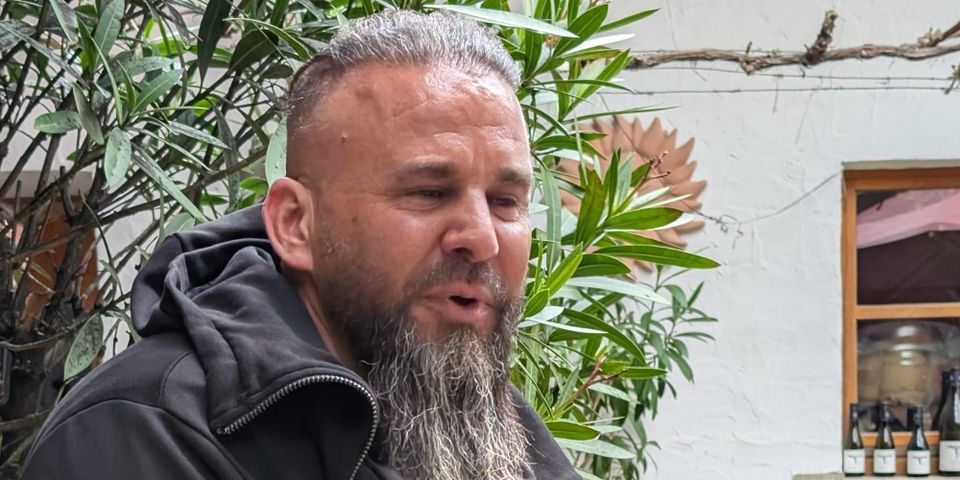
Disclosure: I have a commercial relationship with this producer. See my ethics and disclosure policy.
"I didn't want to, and still don't want to disappear into the anonymity of a 500,000-liter tank." — Friedrich Becker Sr.
In Harold Woetzel's short film "Der Rebell und das Weinwunder." Friedrich Becker und die "5 Freunde," the quote above from Friedrich Becker Sr., aka der "Grosser Fritz," captures the rebellious attitude of one of Germany's leading red wine estates. It only slightly surpasses my second favorite quote in the film, from his son Fritz Becker Jr., aka der "Kleine Fritz, "My mother was the calming center of the family; we're all Hitzköpfe (hotheads), you could say." If, on a quiet evening, you find yourself with 45 minutes to spare, search for this moving and inspiring short film on YouTube about family, determination, and generational change, preferably with a glass of Becker Pinot Noir in hand. It's a story and a reminder of all that is beautiful about wine.
When Allied forces liberated this region in 1945, the village of Wissembourg returned to France, while Schweigen-Rechtenbach, home of the Becker winery, remained on the opposite side of the border in Germany. Wissembourg's vineyards, known since the 14th-century Benedictine era as the best in the area, were now permanently in Alsace.
Fritz Sr.'s father (what should we call him, "am größten Fritz"?!), served on the board of the regional wine cooperative when his son began buying back these vineyards. In 1968, Fritz (the son) visited the Domaine de la Romanée-Conti. Inspired, he decided to start his own domaine in 1973, withholding delivery to the cooperative, and do so without his father's approval—a rebellious move on multiple levels.
He also decided to focus on dry, uncompromising Pinot Noir at a time when sweeter, mass-produced styles dominated the German market. To mark this independent streak, he launched his first bottles with the "Füchschen" (Little Fox) label—a nod to "The Fox and the Grapes," one of Aesop's Fables. Fritz's determination to produce dry and serious red wines drew mockery from his peers. The "sour grapes" fox remains on the label as a badge of honor.
Low yields, the use of small French oak barrels to age his wines (starting around 1990), and a focus on terroir were equally controversial. Germany had just enacted a completely revised "Fifth" wine law in 1971, which explicitly rejected the notion of terroir and embraced a new ideology based on ripeness (i.e., sugar levels). Fritz Sr., with 70% of his vineyards across the French border in Alsace, ignored the paradigm entirely and instead highlighted the limestone vein running through his vines.
Fritz's son, also named Fritz, worked alongside his father and, in 2005, took over cellar responsibilities. The younger Fritz brought his own ideas, which, like father, like son, sometimes met with friction. Fritz Jr. gradually dialed back extraction and new oak, and harvesting at lower oechsle for a fresher style. Friedrich Becker Sr. passed away in February 2025 at the age of 77. According to Fritz Jr., he was out in his beloved vineyards inspecting his vines just the day before he died.
The current Pinot Noirs and Chardonnays, at least from the village level on up to the single vineyards, while elegant, still strike me as structured and concentrated, perhaps more in the old-vine sense, like a Joseph Roty Gevrey-Chambertin Vieilles Vignes. A Becker Pinot Noir has backbone, and that hasn't gone away under Fritz Jr., and the other varieties show it as well, especially their voluminous Chardonnay Schweigen.
Dissecting the Friedrich Becker portfolio takes a bit of work, as a few historical and legal wrenches come into play. During Fritz Sr.'s tenure, the top wines were a cuvée named Spätburgunder 'Reserve' (or 'R') and another cuvée named 'Pinot Noir.' This was before the VDP officially rolled out its standardized four-tier origin pyramid across all regional associations starting with the 2012 vintage, and using a plain term like "Pinot Noir" helped vineyards across the border navigate labeling rules. Once the VDP classified those sites as VDP.Grosse Lage, the cuvées fell way to the GGs as the top wines.
One caveat is a new wine conceived since Fritz Jr.'s involvement, 'La Belle Vue' Pinot Noir, from a 0.8-hectare plot on a massive limestone base with only a thin layer of loess and clay. Fritz Jr. topgrafted a massal selection of Pinot Noir onto 60-year-old Gewürztraminer vines, resulting in exceptionally low yields of under 20 hectoliters per hectare. The very first vintage (2015) set a new benchmark within the Friedrich Becker portfolio. Annual production is minuscule (around 1,000-2,000 bottles), and the price is very high.
The single vineyards classified and used for VDP.Grosses Gewächs (GG) are Sonnenberg, Sonnenberg KB (formerly Kammerberg), a monopole named Sankt Paul, and another monopole named Heydenreich. Schweigener Sonnenberg is a site that swelled after the 1971 wine law from 10 hectares to its current, rather meaningless size of 240 hectares, incorporating many different soils and exposures. The classified section is 13 hectares and gives us Becker's Riesling Sonnenberg GG from limestone-marl.
In 1966, Fritz Sr. began reclaiming the overgrown and forgotten Kammerberg, a historic sub-parcel (a Gewann) on the French side of the Sonnenberg, sloping steeply down toward the abbey of Wissembourg. The Benedictine monks stored the "Kammer" (chamber) wines in the monastery cellar, where they kept them for the senior monks. The Kammerberg has old vines planted in weathered limestone, loam, and clay over pure limestone subsoil—ideally suited to Pinot Noir.
For years, Becker printed "Kammerberg" directly on the label, but because it was in France, German authorities cracked down, and vintages 2015–2017 show a stamped "Zensiert" ("Censored") covering the name. Becker and the other two VDP Schweigen estates now use the official Einzellage name, Sonnenberg, along with the parcel's initials KB for Kammerberg, KT for Kostert, etc.
Sankt Paul is another single-vineyard site, first cultivated by the Benedictines in the 14th century, and believed to have been originally planted with Pinot Noir. It's a south-facing slope near the last remaining watchtower the monks built for defense; the Beckers recovered and replanted it in 2000.
Heydenreich, like Sankt Paul, is a monopole of the Friedrich Becker winery. The site sits on a protected slope bordered by forest, so the Pinot Noir ripens slowly while maintaining balance. Heydenreich features an outcrop of pure, active Muschelkalk (shell limestone) with extremely thin topsoil. The wine is concentrated and structured, with long aging potential, and receives consistently high ratings.
Look for these vineyards on the excellent vdp.weinberg.online map, and you'll see the symbols ³ and * following some vineyard names, sometimes in combination, as in Güldenwingert*³. The ³ tells you it is a German VDP-farmed vineyard residing on French territory. The * tells you that, to get around strict laws forbidding French locations on German labels, the winery registered the vineyard as a trademarked brand name, yet another workaround to identify the wine's specific historic terroir.
I've yet to taste a VDP.Erste Lage from this estate, but the wines do exist. The VDP.Ortswein category gives us Schweigener Pinot Noir, Grauburgunder Kalkmergel and Schweigen Chardonnay, and Chardonnay Mineral. A 2023 Schweigen Chardonnay tasted at the winery in April 2026 showed Meursault-like volume while maintaining tension and acidity. Readers should add this estate's Chardonnay to their watch list.
There is, of course, VDP.Gutswein, as the entry-level, estate-grown tier. Export markets like the U.S. see a justifiably focused Becker offering led by Pinot Noir, Chardonnay, and other Burgundian varieties, often under a Becker Family label from grapes grown by the Becker's neighbors under long-term contract. Fritz tells me the Becker Family line is identical to the Gutswein, though I would like to taste these side by side someday—tasting is believing. We must keep in mind that here in the southern Pfalz, wine estates historically grew and often continue to grow the traditional grape varieties of the region, like Silvaner (labeled here Grüner Sylvaner), Muskateller, and Traminer, and Fritz Jr. continues to produce these as well.
Member discussion