
Karthäuserhof, VDP.Weingut
Disclosure: I have a commercial relationship with this producer. See my ethics and disclosure policy.
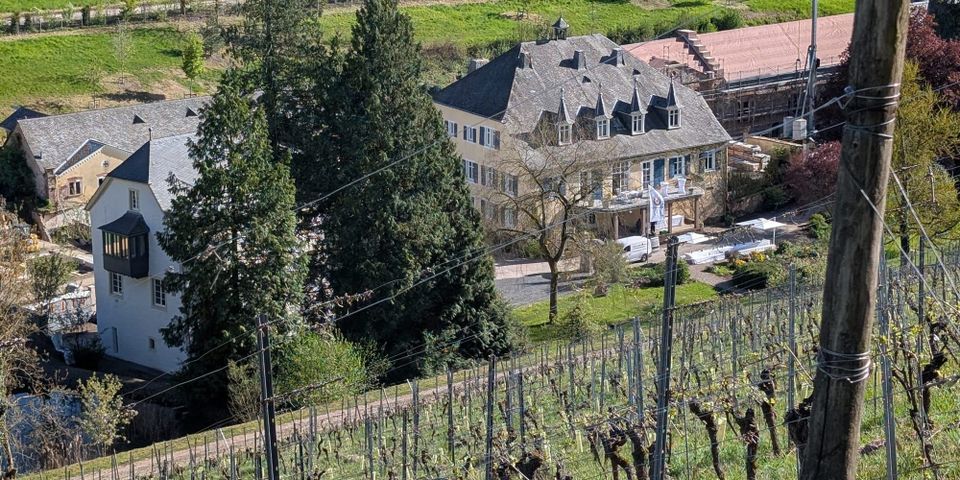
Karthäuserhof is a 28-hectare wine estate in the village of Eitelsbach, on the final stretch of the Ruwer before it empties into the Mosel. Carthusian monks founded the estate in 1335 after Prince-Elector Balduin of Luxembourg granted them the land, and it remained a monastery winery until Napoleon secularized it in 1811. The Carthusians are a monastic order founded by St. Bruno of Köln in 1084 in the Chartreuse Mountains of France, famously known for developing the herbal liqueur "Chartreuse."
Karthäuserhof became state property after secularization in 1803. It remained in government hands for eight years before being auctioned off in Paris to Valentin Leonardy, General Manager of the French Army, in 1811. Through marriage and inheritance, the estate passed to the Rautenstrauch family, who owned and managed it for 127 years, cementing their name in the winery's official title: Rautenstrauch'sche Weingutsverwaltung Karthäuserhof (Winery Administration Karthäuserhof belonging to the Rautenstrauch family).
Karl Wilhelm Rautenstrauch, the second-generation Rautenstrauch, is credited with inventing the estate's iconic neck-only label. As the legend goes, he preferred to cool his wine in the Eitelsbach stream; because the water washed off the traditional body labels, he moved the label to the neck. In 1876, he married Kathinka Mühlens (of the famous "4711" Cologne perfume family), who introduced the brand's signature turquoise color, which still defines the brand today.
Hans Wilhelm Rautenstrauch, the third generation of Rautenstrauchs, managed the estate for over 50 years. He steered the winery through both World Wars and produced several great vintages. Hans Wilhelm's daughter, Maria Rautenstrauch, married Werner Tyrell in 1947, and upon Hans Wilhelm's death in 1951, Werner Tyrell took over the estate.
During Werner Tyrell's time, the 19-hectare monopole Karthäuserhofberg consisted of five separate sites, with Kronenberg as the filigree. It is the steepest, most central part of the slope, with iron-rich slate. The Kronenberg is typically the source for the Grosses Gewächs (GG) and top Prädikat wines. The other parcels are:
Burgberg: Located at the lower end of the slope, often providing the foundation and broader fruit for the estate's blends.
Orthsberg: Known for producing wines with intense mineral drive and sharp precision.
Sang: Situated on the edge of the vineyard, it often yields slightly different aromatic profiles due to its specific exposure.
Stirn: Located at the top of the hill where the vines are most exposed to the wind. Because it is cooler, this parcel is famous for maintaining high acidity and producing very "nervy," elegant wines.
Werner Tyrell's tenure oversaw outstanding vintages in the 50s, 60s, and 70s. Tyrell himself held the 1959 vintage in high regard, and the 1971 Eitelsbacher Karthäuserhofberg Kronenberg feinste Auslese is considered a masterpiece of the Werner Tyrell era. The weather of the 1970s was very uneven, however, and because Prädikat wines must achieve their sugar naturally, no chaptalization is a hard-and-fast rule. Sadly, Tyrell was indicted for wine adulteration, which forced his resignation as President of the Grosser Ring.
In 1986, Christoph Tyrell, the sixth generation, took over the winery, implementing a "quality first" policy and adopting a single label for the entire production. Tyrell expanded dry Riesling from Karthäuserhofberg, 90% of which remains own-rooted, and planted Pinot Blanc on heavier soil at the foot of the hill. He famously removed every third row of vines across several sections of the vineyard, reducing total yield and improving sunlight and air circulation, leading to healthier, riper fruit.
Tyrell installed Ludwig Breiling as the estate administrator and cellar master and, in the 1980s, moved away from chemical fertilizers and pesticides toward horse manure, compost, and pheromone-based pest control. They removed the old wooden Fuder barrels and replaced them with stainless-steel vats to achieve a cleaner, more reductive style. All the changes paid off. Christoph Tyrell was named Winemaker of the Year twice: first by Feinschmecker in 1997, and again by Gault Millau in 2005.
On August 1, 2012, Christoph Tyrell handed over the winery to his first cousin, Albert P. Behler, in an intrafamily transaction. Behler hired Mathieu Kauffmann (the former cellar master of Champagne Bollinger and Von Buhl) as technical director and began restoring historic buildings and shifting toward more sustainable practices. Kauffmann is reintroducing Fuder to the cellar and is, of course, spearheading a Karthäuserhof Sekt program.
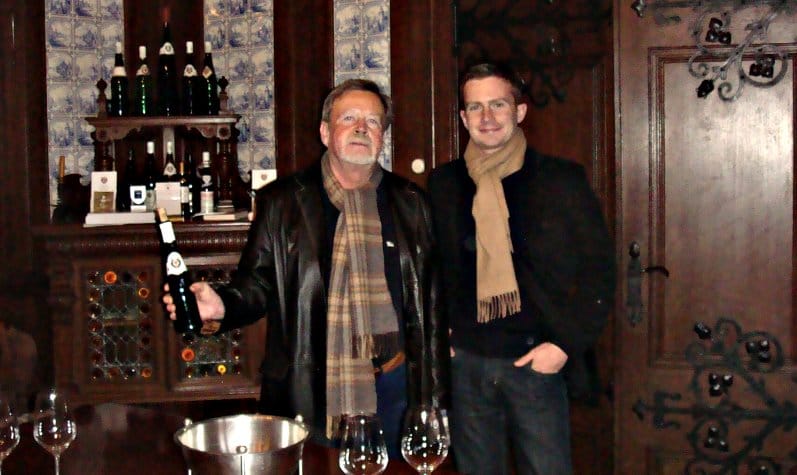
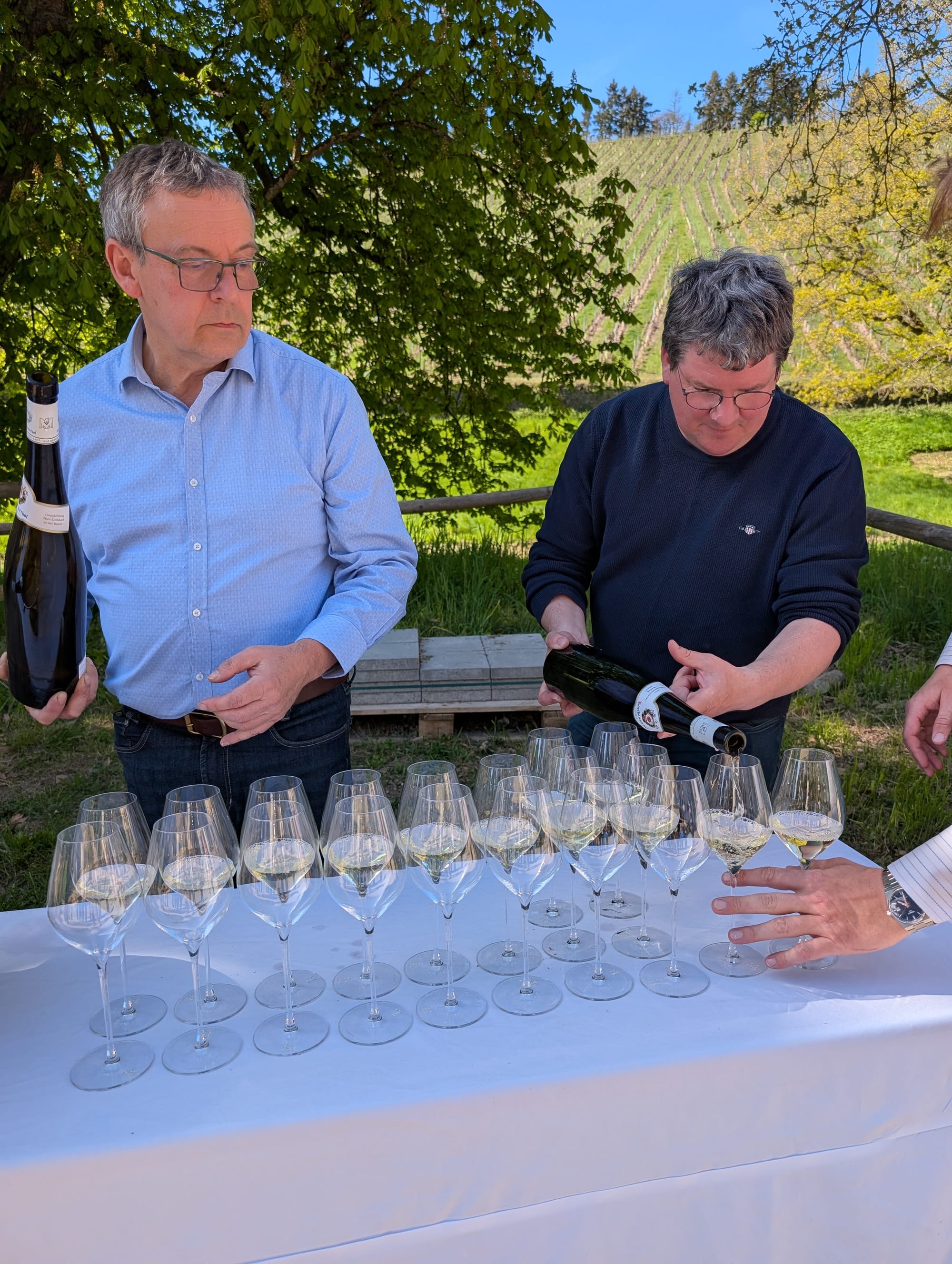
Tasting with Christoph Tyrell in 2008. In the modern era (2026), the Sekt flows freely with Technical Director Mathieu Kaufmann and Operations Manager Dominik Völk.
Member discussion