Hessische Bergstraße Producers
Griesel & Compagnie, Sekthaus
Simon-Bürkle, Weingut
Hessische Bergstraße: The Spring Garden →
Germany's VDP
The stylized "Traubenadler" (grape eagle) originally faced left. With the 2012 rollout of the VDP's vineyard classification, the eagle turned its head to the right, symbolically looking toward the future rather than the past.
German Wine References
Bibliography
Bird, Owen. Rheingold, The German Wine Renaissance. Arima Publishing, 2005.
Braatz, Dieter. Sautter, Ulrich. Swoboda, Ingo. Wine Atlas of
German Wine Law
The First German Wine Law, enacted on April 20th, 1892, was the first federal attempt to regulate production. It focused on hygiene and preventing the sale of "artificial" wine. The 1892 law prohibited the use of chemical additives but allowed the addition of sugar to compensate for the na
German Wine History
"The light at the end of the Dark Ages has a name - and it is Charlemagne." — Huge Johnson, The Story of Wine
German Wine Glossary
Anreicherung (Chaptalization)
The French chemist Jean-Antoine-Claude Chaptal invented the practice of enriching the grape must before or during
German Vintages
2024
2024 saw record-breaking March temperatures in Germany, pushing budbreak two to four weeks ahead of normal. The ensuing
German Grape Varieties White
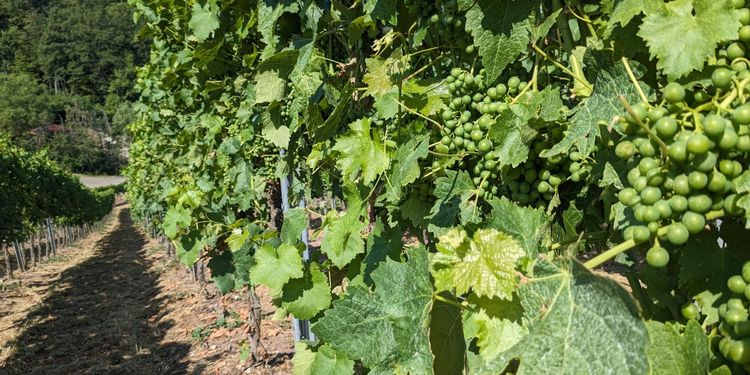
Bacchus is a Silvaner x Riesling cross with Müller-Thurgau (Riesling x Madeleine Royale). It was developed by Peter Morio at the Geilweilerhof Institute in the Pfalz in 1933 and released for general cultivation in 1972. Bacchus is named after the Roman god of wine (Dionysus in Greece). It
German Grape Varieties Red
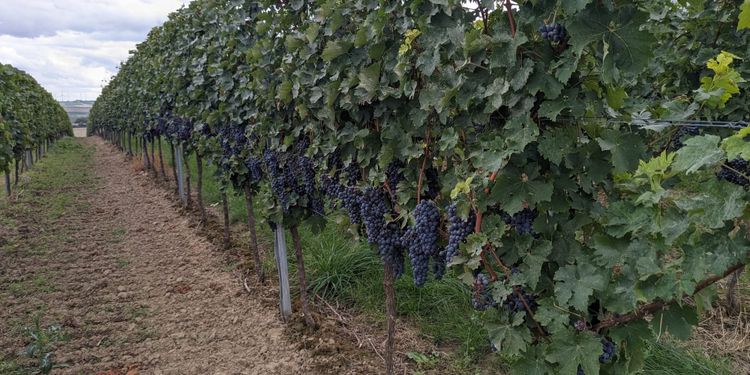
Frühburgunder or Pinot Noir Précoce (aka Pinot Madeleine) is an early ripening mutation of Pinot Noir. The German word Früh and the French word Précoce mean the same thing: early, and the variety ripens around two weeks before Pinot Noir. Its exact place of origin is unknown; however, judg
Franken: Silvaner's Heimatland
Silvaner is Franken's signature variety, usually bottled in a PDO-protected Bocksbeutel, but some of Germany's finest dry Rieslings and Spätburgunders come from Franken, although grown in tiny quantities.